
Why School Uniforms Matter in Modern Education (2026 Guide)
Discover why school uniforms matter in modern education. Explore global benefits, discipline impact, equality, and future trends in schools worldwide.
SCHOOL UNIFORM GUIDE
Written by uniform industry professional with experience in institutional supply and fabric sourcing.
2/18/20265 min read
Why do school uniforms still matter in modern education?
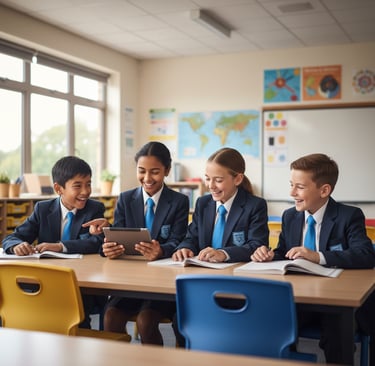
Even as education systems evolve to incorporate digital classrooms and progressive learning systems, school uniforms continue to be a well-organized part of educational institutions around the world, including the United States of America, the United Kingdom, India, Australia, and other nations.
Contrary to being an outdated tradition, school uniforms are an incredibly useful tool that promotes equality, discipline, identity, and academic concentration.
This comprehensive guide will examine the significance of school uniforms in education, the advantages they provide to students and educational institutions, and why they continue to be a relevant part of the modern educational setting.
What Is the Purpose of School Uniforms?
Essentially, a school uniform is more than just standardized clothing.
It is intended to:
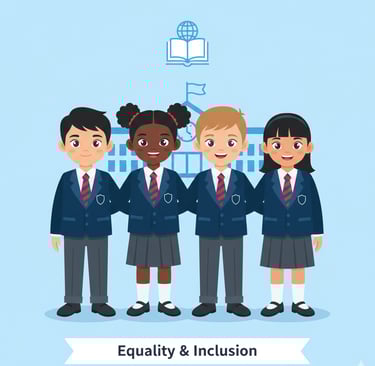
Encourage equality among students
Prevent distractions
Enforce discipline
Enhance school identity
Ensure campus safety
In contemporary education settings where the well-being of students and well-structured learning environments are of utmost importance, school uniforms serve as a basic framework that facilitates educational development.
1. Promoting Equality and Reducing Socioeconomic Gaps
One of the most widely discussed advantages of school uniforms is their ability to reduce socioeconomic differences.
Without school uniforms, clothing becomes:
A reflection of family income
A source of peer comparison
A potential source of exclusion
In a global education system, especially in a diverse urban setting, fashion-based social competition can be unnecessary.
School uniforms remove the branding and provide a level playing field.
Students are measured on:
Academic achievement
Character
Participation
Conduct
—not fashion choices.
This systematic approach promotes inclusion and social harmony within the classroom.
2. Enhancing Academic Concentration and Discipline
Research and teacher insights from around the world indicate that organized environments have a beneficial impact on academic achievement.
School uniforms help in the following ways:
Reducing morning decision fatigue
Eliminating distractions associated with clothing
Creating a formal academic environment
When students wear school uniforms, they make a mental transition to “academic mode.”
This psychological shift is helpful in the following ways:
Enhancing classroom behavior
Improving attentiveness
Boosting interactions with peers
Discipline is not about limiting freedom but about designing predictable and stable academic systems.
School uniforms help in achieving this stability.
3. Building School Identity and Belonging
Contemporary education emphasizes community building, in addition to academic success.
School uniforms provide:
A sense of identity
Unity in appearance
A source of institutional pride
In nations like United States, United Kingdom, and India, school uniforms are inextricably linked to school culture.
A good school uniform promotes a sense of belonging.
Students experience a sense of shared purpose rather than being lone entities.
This feeling of belonging has a profoundly positive effect on emotional and psychological well-being.
4. Improving Campus Safety and Identification
Safety is an important issue in contemporary educational institutions.
School uniforms enhance safety in the following ways:
They make it easier to identify unauthorized persons
They enable teachers to identify students promptly
They make it easier to supervise students during events and field trips
In a large campus, rapid visual identification enables faster reaction times and improved crowd control.
Uniform systems promote clarity.
Clarity enhances safety.
5. Bullying and Appearance-Based Pressure Reduction
Appearance-based bullying is a worldwide problem.
Fashion trends lead to:
Social stratification
Brand comparison
Exclusion patterns
Standardized dress codes eliminate clothing-based competition.
If everyone wears the same clothing:
Social anxiety is reduced
Peer comparison lessens
Confidence increases
Contemporary education emphasizes mental health and emotional stability.
School uniforms are an indirect contributor to this.
6. Teaching Professionalism from an Early Age
Education is training students for a professional environment.
In most organizations around the world, there are dress codes.
Uniforms teach students about:
Personal grooming standards
Presentability
Institutional respect
Personal responsibility
Learning about professional attire standards from a young age is an effective way to instill professionalism in students.
7. Cost Efficiency for Families
One of the myths about school uniforms is that they are costly.
The truth is that school uniforms can actually lower the cost of clothing every year.
If there were no school uniforms, families would have to buy:
Trend-based clothing
Seasonal clothing
Brand-driven clothing
School uniforms eliminate the need for impulse purchases.
The use of durable fabric and rotation also limits the need for replacement.
This is a source of financial stability for many families around the world.
8. Promoting Institutional Branding and Reputation
School uniforms also serve as branding elements.
A well-designed uniform conveys the following:
Institutional standards
Educational philosophy
Cultural values
Professional structure
World-class institutions spend a lot on designing their school uniforms because of its impact on reputation.
School uniforms are physical manifestations of educational excellence.
9. Addressing the School Uniform Debate
Those who oppose school uniforms claim that they stifle individuality.
But individuality is manifested in the following ways:
Academic achievement
Creative endeavors
Leadership positions
Personal accomplishments
The contemporary education system seeks to cultivate ability and personality.
Standardization of clothing within the educational setting does not diminish creativity—it directs it.
Uniforms offer structure; personality offers flair.
10. Global School Uniform Trends for 2026
The future of school uniforms is changing.
Schools around the world are adopting:
Sustainable materials
Breathable PC blends
Anti-bacterial fabrics
Climate-responsive textiles
Wrinkle-resistant designs
Environmental stewardship is becoming a core part of education systems.
Sustainable school uniforms are in high demand globally, particularly in developed countries.
The future of education wear focuses on comfort, longevity, and eco-friendly production.
How Schools Can Choose the Right Uniform Supplier
For schools considering uniform services, the following are important considerations:
Durability of fabric
Uniformity of size standards
Quality of color retention
Strength of stitching
Reliability of mass supply
Adherence to ethical sourcing principles
Today, schools are looking for more long-term relationships than short-term contracts with suppliers.
Quality has a direct impact on student comfort and school reputation.
Frequently Asked Questions (FAQ)
1. Do school uniforms help improve academic performance?
School uniforms, by themselves, do not ensure better grades, but they help create organized settings that can lead to improved concentration and behavior in class.
2. Why are school uniforms essential in contemporary education?
They encourage equality, minimize distractions, improve security, and boost school identity.
3. Are school uniforms cost-effective?
Yes, in most instances. Uniforms help cut annual fashion costs.
4. Do school uniforms help prevent bullying?
They can help prevent bullying that is based on economic disparities, as there will be no visible differences.
The Future of School Uniforms
With the modernization of education systems around the world, school uniforms are not going away; they are just changing.
The emphasis is on:
Design with comfort in mind
Environmentally responsible production
Inclusive sizing options
Adaptability to climate
A structured academic environment will continue to use standardized dress codes as part of their overall system.
School uniforms are more than just clothing.
They are a system of reinforcing educational ideals.
Final Thoughts
School uniforms are important in contemporary education because they offer structure in a world of increasing complexity.
They promote equality in today’s diverse classrooms.
They promote discipline without stifling identity.
They enhance safety, professionalism, and institutional pride.
In the contemporary education environment, school uniforms are an important and strategic part of structured learning environments.
About City Uniforms
Learn more about City Uniforms and our commitment to quality uniform solutions. City Uniforms is committed to providing structured, robust, and institutionally aligned uniform solutions that address the changing standards of education.
With a focus on fabric quality, stitching accuracy, and efficient bulk ordering, the aim is to help institutions with their uniform needs.
If your institution is considering or improving its uniform program, expert advice and structured supply planning can help improve outcomes.
Schools seeking expert guidance can request a professional uniform consultation to discuss their requirements.
Explore more at:
Institutions in North India looking for a reliable school uniform supplier in Hapur can explore structured bulk solutions.







Address
Shop No.: 32/33, First Floor, City Plaza, Railway Road, Hapur-245101
About us
City Uniforms supplies school-approved school uniforms in Hapur for DPS, Dewan, Saraswati Bal Mandir, LNPS and more, trusted by parents for comfort and quality.
Contact Us
info@cityuniforms.in
+91-8791924342, +91-7060405544